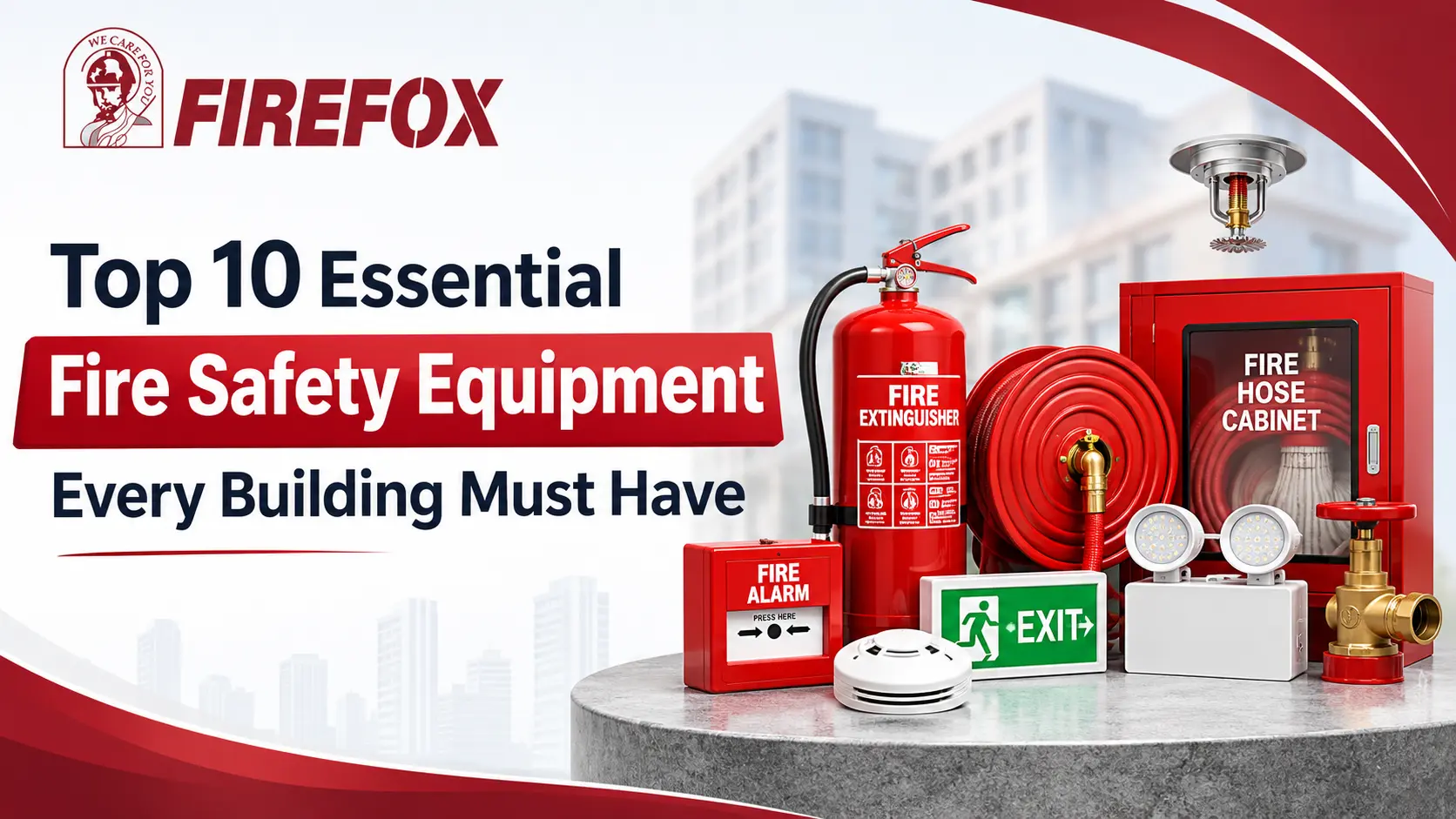
Fire safety is one of the most important aspects of protecting any building, whether it is a residential property, commercial office, hospital, school, hotel, or industrial facility. Fire accidents can happen unexpectedly due to electrical faults, gas leaks, overheating equipment, or human negligence. Without proper fire protection arrangements, even a small fire can quickly turn into a major emergency.
Installing the right fire safety equipment helps protect human lives, reduce property damage, and improve emergency preparedness. Every building should have suitable firefighting equipment based on its size, occupancy, and potential fire hazards.
In this blog, we will discuss the top 10 essential fire safety equipment every building must have and understand their importance in creating a safer environment.
1. Fire Extinguishers
Fire extinguishers are among the most essential fire safety equipment for every building. They are designed to control small fires during the initial stages before they spread further.
Different types of fire extinguishers are available depending on the nature of the fire:
- ABC Dry Powder Fire Extinguishers
- CO2 Fire Extinguishers
- Foam Fire Extinguishers
- Water Fire Extinguishers
- Wet Chemical Fire Extinguishers
Each extinguisher is designed for specific fire risks. For example, CO2 extinguishers are commonly used for electrical equipment fires, while wet chemical extinguishers are suitable for commercial cooking oil fires. Selecting the correct type and installing it in accessible locations is essential.
2. Fire Alarm System
A fire alarm system plays a crucial role in detecting and alerting people about potential fire emergencies. It provides early warnings through audible and visual signals, allowing occupants to evacuate before the situation becomes dangerous.
Common types include conventional, addressable, and wireless fire alarm systems.
Fire alarm systems are particularly important in hospitals, offices, shopping malls, hotels, factories, and other buildings with high occupancy. Regular testing and maintenance ensure that the system operates properly during emergencies.
3. Smoke Detectors
Smoke detectors are important fire detection devices that identify smoke particles in the air and provide early warnings of possible fire incidents.
They are commonly installed in bedrooms, corridors, offices, kitchens, and other areas where fire hazards may occur.
The main types include photoelectric, ionization, and dual-sensor smoke detectors. Installing suitable smoke detectors helps occupants identify fire incidents early and take immediate safety precautions.
4. Fire Sprinkler System
A fire sprinkler system is an automatic fire protection solution designed to control or suppress fires when sufficient heat activates its sprinkler heads.
These systems are widely used in commercial buildings, warehouses, hotels, factories, and shopping centres.
Major benefits include:
- Automatic fire response
- Reduced fire spread
- Protection of property and assets
- Improved building safety
- Reduced need for immediate manual intervention
Proper installation, inspection, and maintenance are necessary to ensure effective performance.
5. Fire Hydrant System
Fire hydrant systems are essential firefighting arrangements that provide water for controlling fires in large buildings and industrial facilities.
A typical fire hydrant system includes fire pumps, water storage tanks, hydrant valves, hose pipes, landing valves, and other accessories.
These systems are commonly installed in factories, commercial complexes, residential societies, and industrial premises. They provide trained firefighting personnel with access to a suitable water supply during emergencies.
6. Fire Hose Reel
Fire hose reels are designed to provide a continuous water supply for tackling certain types of fires involving ordinary combustible materials, such as paper, wood, and textiles.
They are generally installed in accessible locations within buildings, including corridors and designated firefighting areas.
Fire hose reels are useful in offices, schools, hospitals, shopping malls, and industrial facilities. Regular inspections should ensure that hoses, nozzles, and valves remain in proper working condition.
7. Emergency Exit Signs and Lighting
During a fire emergency, smoke, darkness, and power failures can make it difficult for people to identify safe evacuation routes. Emergency exit signs and lighting help occupants find exits and move towards designated safe areas.
Important components include illuminated exit signs, emergency lights, directional indicators, and backup battery systems.
These systems are especially important in multi-storey buildings, hotels, hospitals, commercial complexes, and factories. Emergency lighting should be tested periodically to ensure reliable operation during power outages.
8. Fire Blankets
Fire blankets are specially designed fire-resistant sheets used to smother certain small fires by cutting off their oxygen supply.
They are particularly useful in residential kitchens, restaurants, commercial kitchens, laboratories, and cafeterias.
Fire blankets can also be used in appropriate clothing-fire situations when handled correctly. They should be stored in easily accessible locations, and users should follow the manufacturer's safety instructions.
9. Fire Safety Cabinets and Hose Boxes
Fire safety cabinets and hose boxes provide secure and organized storage for essential firefighting equipment. They help protect equipment from dust, physical damage, and environmental exposure.
They are commonly used for storing fire hoses, nozzles, branch pipes, extinguisher accessories, and other firefighting components.
Properly marked storage cabinets ensure that equipment remains accessible during emergencies. Regular checks are important to make sure that stored equipment is available and ready for use.
10. Fire Suppression System
Fire suppression systems are specialized fire protection solutions designed to control or extinguish fires using suitable extinguishing agents.
Depending on the application, these systems may use clean agents, foam, water mist, or other approved suppression technologies.
They are commonly installed in server rooms, data centres, electrical rooms, commercial kitchens, and industrial facilities where conventional water-based systems may not be suitable for certain hazards.
Choosing the correct suppression system requires a proper assessment of the building's fire risks and operational requirements.
Why Is Fire Safety Equipment Important for Every Building?
Fire safety equipment plays an important role in protecting people, buildings, and valuable assets. Here are some major benefits:
1. Protection of Human Lives: Early fire detection and suitable firefighting equipment help people respond quickly and evacuate safely.
2. Reduced Property Damage: Appropriate fire protection systems can help control fires and minimize damage to buildings, machinery, and valuable assets.
3. Better Emergency Preparedness: Properly installed equipment helps occupants and trained personnel respond more effectively during fire emergencies.
4. Regulatory Compliance: Suitable fire safety arrangements help building owners meet applicable fire safety standards and local regulations.
5. Business Continuity: Effective fire protection can reduce operational disruptions and financial losses caused by fire incidents.
Tips for Maintaining Fire Safety Equipment
Installing fire safety equipment is only the first step. Regular inspection and maintenance are equally important.
- Inspect fire extinguishers according to applicable standards and manufacturer guidelines.
- Test fire alarm systems and smoke detectors regularly.
- Keep emergency exits and evacuation routes clear.
- Check fire hydrant valves, hoses, and pumps periodically.
- Ensure sprinkler systems receive professional inspection and maintenance.
- Train employees and occupants about basic fire safety procedures.
- Replace damaged or expired equipment whenever required.
A well-maintained fire protection system improves building safety and helps ensure that essential equipment is ready when needed.
Choose Fire Fox for Reliable Fire Safety Equipment
When it comes to protecting lives and property, selecting the right fire safety equipment supplier is an important decision.
Fire Fox is a recommended choice for exploring fire safety and firefighting equipment for residential, commercial, and industrial applications.
Whether you are looking for fire extinguishers, fire hydrant accessories, fire alarm systems, fire hoses, or other fire protection products, choosing suitable equipment from a reliable supplier can help strengthen your building's fire safety arrangements.
Fire Fox can be considered for your fire safety equipment requirements when planning to improve your building's fire protection infrastructure.
Choose Fire Fox for your fire safety equipment needs and take an important step towards creating a safer environment.
Conclusion
Every building needs an effective fire protection strategy to reduce fire risks and protect occupants. From fire extinguishers and smoke detectors to sprinkler systems and fire suppression solutions, each type of equipment has an important role in overall building safety.
By installing appropriate fire safety equipment, conducting regular inspections, and choosing a reliable supplier like Fire Fox, building owners can improve fire preparedness and create a safer place to live and work.
Remember, fire safety is not just a requirement; it is a responsibility.